How Canadian SMBs use Trustpilot reviews to shortlist a managed IT provider: what to read for, PIPEDA and Law 25, and the questions to ask next.
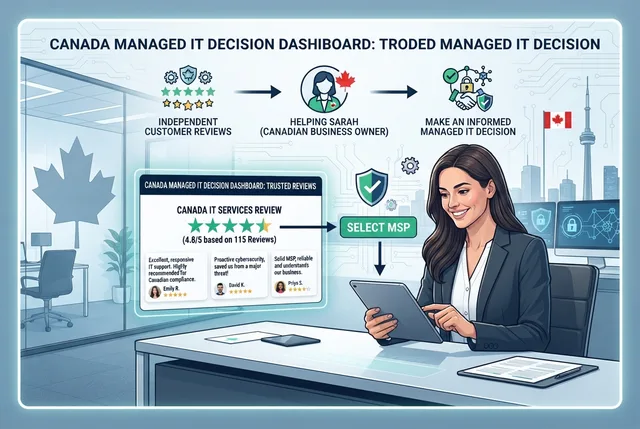
A polished MSP website can claim around-the-clock monitoring, written SLAs, and honest communication. A Trustpilot review is one of the few places a Canadian buyer can check those claims in someone else's words, including the unhappy ones.
In one minute
- Use reviews to shortlist, not to sign. Specific incidents beat star averages.
- Look for Canadian context: after-hours response, bilingual support, PIPEDA or Law 25 work, and what happened when something failed.
- A third-party page is outside the provider's homepage. It is still not an audit.
- Finish the shortlist with questions you ask on a call. Reviews do not replace that conversation.
When Canadian firms look for managed IT or cybersecurity help, the hard part is not finding a vendor. It is finding evidence of what the team does when email is down at 2 a.m. or a Microsoft 365 cutover fails on Monday morning.
Trustpilot gives customers a third-party page to describe that experience. The useful reviews name a situation. The weak ones only say the team was great.
Reviews narrow the list. The conversation finishes it. Take the questions to ask any Winnipeg MSP before you sign into that call, and put the answers next to MSP vs break-fix if you are still deciding whether a managed plan is the right shape.
A five-star comment that could have been written about any vendor in any country does not tell you whether the provider has worked under Canadian rules. Businesses here deal with PIPEDA. Most Quebec firms also deal with Law 25. Contracts often ask where data sits, and many teams want English and French support without an offshore ticket queue.
Reviews that mention a Manitoba clinic, an Ontario retailer, or a Quebec software team are more useful than a generic compliment, because they show whether the provider has done the local work or is only repeating the right nouns. The privacy baseline is in PIPEDA basics for IT vendors.
Public comments are part of the service. Clients can review Amen Security on Trustpilot, and the same link is on the Trust page so a buyer can read them without asking for a PDF.
A useful review names a result: a stable Microsoft 365 cutover, a multi-site issue the provider owned, a written SLA that made a budget conversation easier. Read the page yourself: Amen Security on Trustpilot.
No. Use them to drop vendors whose recent reviews describe the same failure over and over. Then ask the remaining ones how they handle the situation those reviews describe.
Not on a third-party site the way they can on their own homepage. They can still reply, and they can still ask happy clients to write. Read the replies. A defensive reply tells you as much as the review.
A real job, a time of day, and a constraint you recognize: language, a privacy obligation, on-site work in your province, or a remote office in another one. Vague praise does not answer those.
When you need scope, price drivers, and a named response path. That is a conversation, and it can start with a free assessment before anyone talks about a contract. Pricing context for that conversation is in what managed IT actually costs in Canada.
Your comment will be published after our team reviews it.
Keep reading

Managed IT in Winnipeg for 30–80 seat businesses: what to expect in 2026 — real support, on-site help across Manitoba, and a free assessment before you sign.
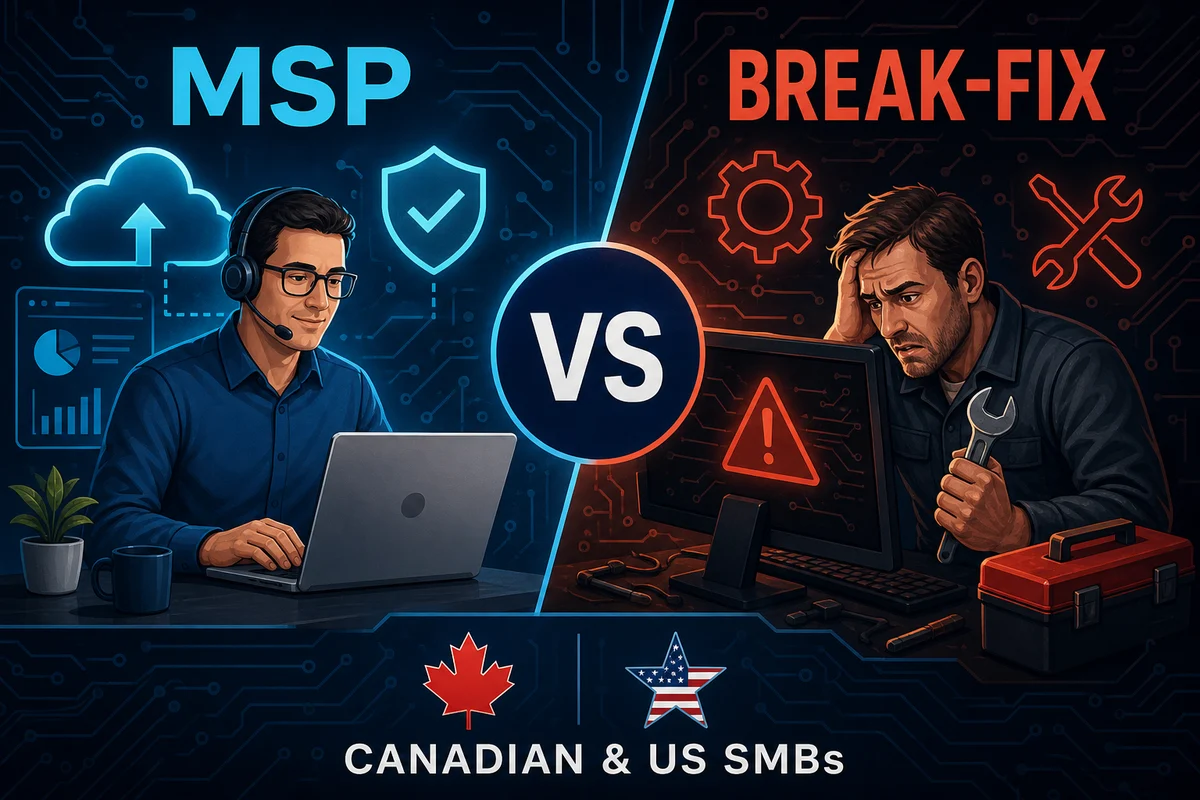
Reactive IT support looks cheaper until downtime, ransomware, and staff burnout show the real bill. Here is how managed services compare for Canadian small and mid-sized businesses.
Two MSP quotes for the same headcount can be far apart. Here is how we read them from Winnipeg — licences vs labour, what belongs in an SLA, and when a hire still wins.