An MSP is not a break-fix guy on retainer. It is ongoing remote IT — monitoring, patching, backups, identity, and a written SLA. Plain language for Canadian SMBs.

Owners ask “what is an MSP?” after the third weekend outage, or after a quote that says “managed” and means nothing. Short version: a managed service provider is the company you hire to run day-to-day IT on purpose — not only when something is already broken.
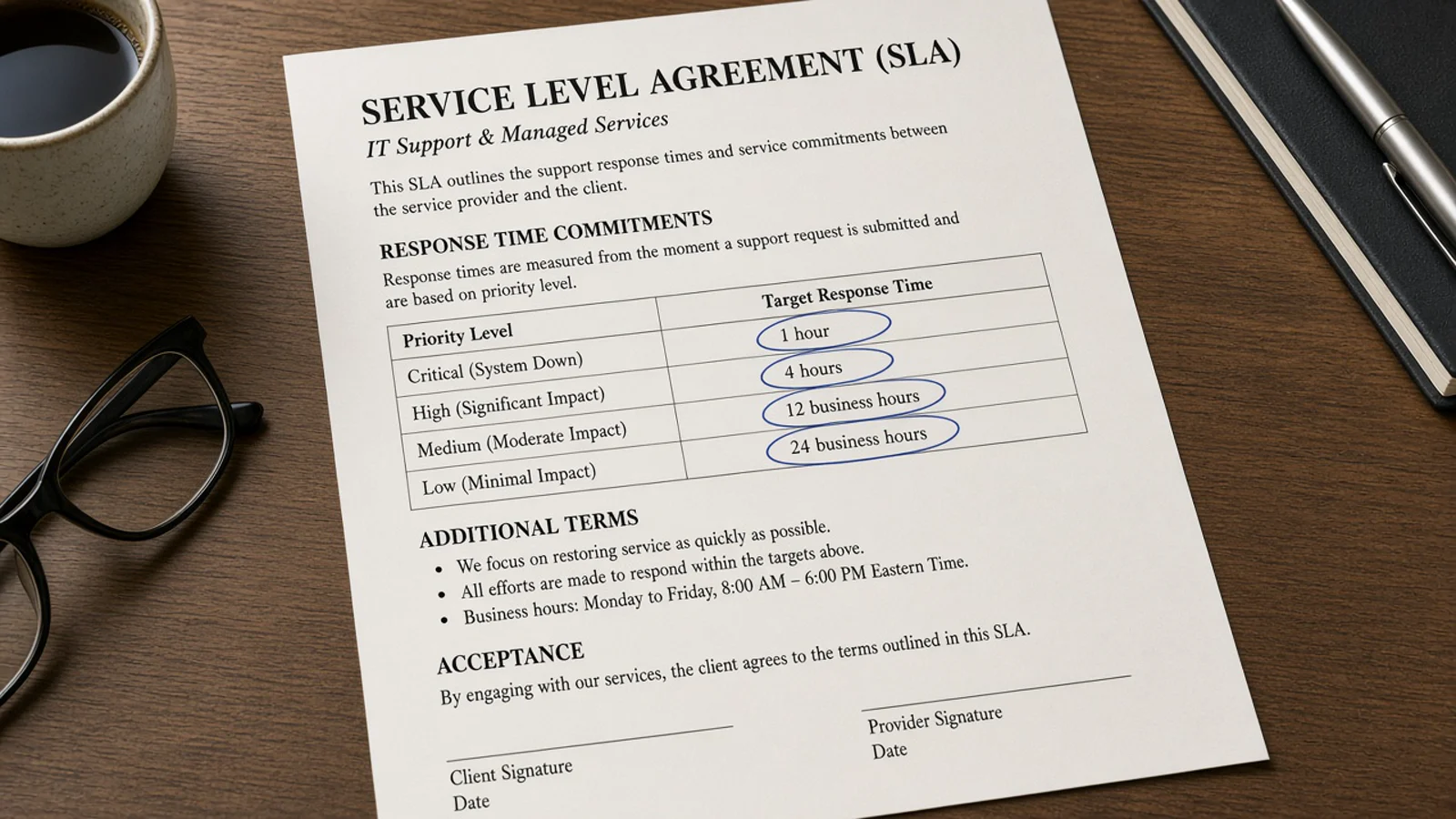
That usually means monitoring, patching, backups that get restore-tested, Microsoft 365 / identity hygiene, endpoint protection, and a help desk with response times you can show a partner. Amen is a Winnipeg shop doing that for Canadian and US SMBs under managed IT. Remote-first. French tickets when your team works in French.
Break-fix — you call when it hurts. Fine for tiny, simple stacks. Expensive when outages cluster or security debt compounds. Honest comparison: MSP vs break-fix.
MSP — monthly scope plus SLA. Prevention is in the fee because downtime costs you money.
Hire — one salary, benefits, tools, and a coverage gap when they are sick or on vacation. Best when IT is the product, or when you want co-managed (internal person + MSP depth).
Managed IT is not “unlimited projects for one flat fee.” New sites, migrations, and custom apps are usually quoted separately. If a proposal hides that, keep shopping.
Response vs resolution (both named). After-hours definition. Inclusions vs exclusions — cabling, net-new apps, training marathons. Backup proof on a cadence you can audit. Security baseline — MFA, endpoint protection, patch windows — not “antivirus included” hand-waving. Exit clause: admin access, documentation, tenant roles returned if you leave.
Red flags: no written SLA, all admins on someone’s personal Gmail, refusal to document restores, or “we own your domain.” Walk away.
Fully managed — MSP owns day-to-day ops; you keep business decisions. Co-managed — you keep someone for context and projects; MSP carries after-hours, security depth, restore drills. Common in thirty-to-eighty-seat firms that outgrew break-fix but are not ready for a full IT department.
Not sure which lane? Signs you need an MSP and how quotes actually work in managed IT cost in Canada — without fake per-seat stickers on a blog.
“If I outsource, do I lose passwords and data?” Good contracts say no: you keep global admin ownership or contractual access; operations are delegated. Bad contracts hide exit traps. Ask for the exit paragraph before you talk price.
We serve Winnipeg, Toronto, Montreal, and US clients the same remote way — geography pages are pointers, not pretend storefronts. Book a fit call if you want a second opinion on a proposal sitting in your inbox.
Your comment will be published after our team reviews it.
Keep reading

Canadian MSPs all publish “signs you need an MSP.” Here is Amen’s version: seven operational tells, two cases where hiring or a contractor still wins, and what a written SLA should prove in 90 days.

Two MSP quotes for the same headcount can be far apart. Here is how we read them from Winnipeg — licences vs labour, what belongs in an SLA, and when a hire still wins.
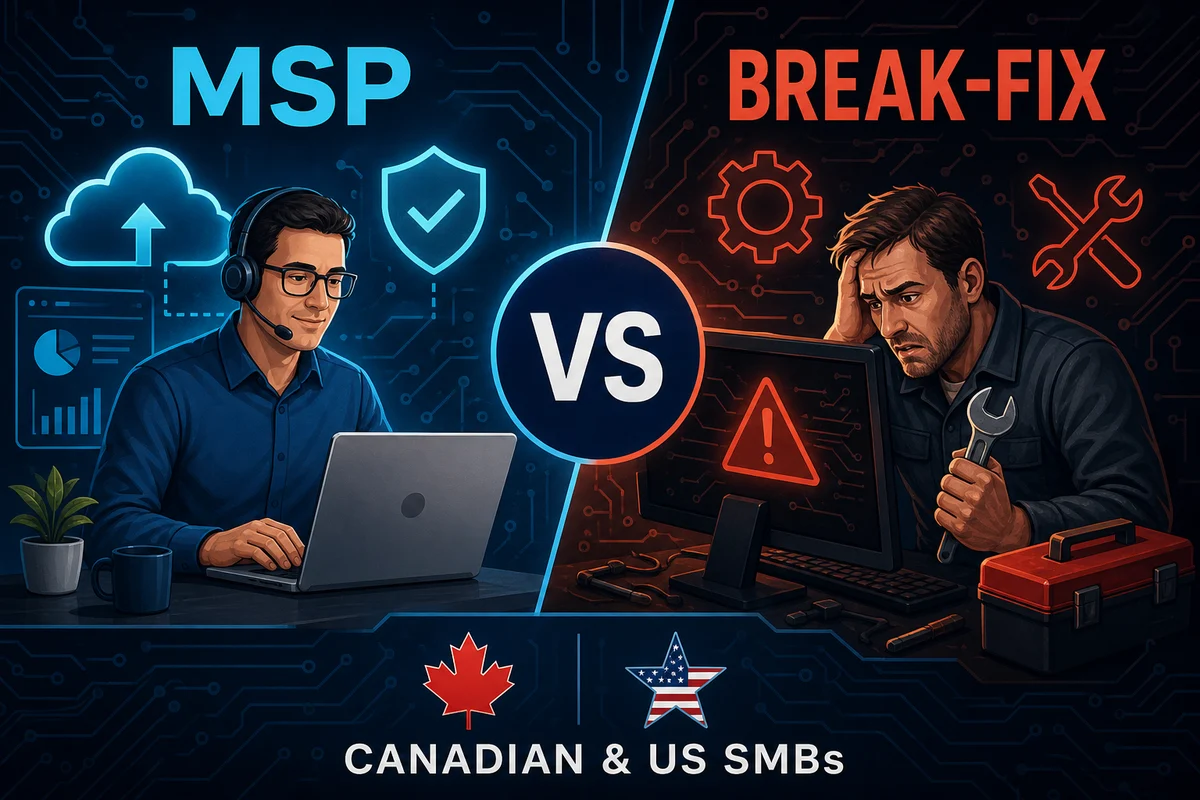
Reactive IT support looks cheaper until downtime, ransomware, and staff burnout show the real bill. Here is how managed services compare for Canadian small and mid-sized businesses.